

Vendor Risk Management. How to Build an Effective Programme
Quick Summary
Core verdict: Vendor risk management is the system that shows your organisation controls the risk its vendors bring, in practice and not just on paper. Assessments on file prove you checked your vendors once. Vendor risk management proves you keep acting on what you find.
Key insight: The test is evidence. Conditions followed up, reassessments triggered and a quarterly board report show your policy is in effect.
Actionable step: Build your vendor inventory this month, then name one owner with the authority to escalate to your board.
Quick navigation
You've been handed the job of building a vendor risk management programme. Your board, auditor or insurer wants to see which vendors hold your data, what evidence backs each one and who signed off. You've got records scattered across departments and no idea which vendors have been vetted.
That's a lot to be lumped with.
A vendor risk management programme is the system your organisation uses to control the risk its vendors bring. A vendor risk assessment checks one vendor at a point in time. The programme decides which vendors get assessed, how deeply and on what schedule, who signs off on each decision and what your board sees.
You don't need to build it all at once, but the key to success is to build it in the right order, and this article lays it out.
If you need the fundamentals first, start with what a vendor risk assessment covers.
What turns my vendor risk assessments into a programme?
Four building blocks sit above the assessments themselves. Ownership, a policy that runs in practice, clear decision rules and board reporting. Your vendor inventory and tiering come first, and how to build a vendor risk assessment framework covers both.
4 building blocks a vendor risk programme can't run without
- One accountable owner, backed by risk, legal, procurement and security
- A vendor risk policy with dated evidence it runs in practice
- A named approver for each vendor rating, from Approved to Not Recommended
- A quarterly board summary of top-tier vendors, open conditions and accepted risks
Each block turns paper into practice. Ownership comes first, because the other three need a name behind them.
Who should own vendor risk management in my organisation?
One named owner, backed by risk, legal, procurement and security. The owner can sit in risk, compliance or IT. What matters is a name against the role.
Ownership gets contested early. Procurement signs the contracts, IT manages the integrations, and legal holds the terms, so each team assumes vendor risk sits with the next one. Settle it in writing before your first assessment and give the owner the authority to escalate.
How do I know my vendor risk management policy works in practice?
Ask for the evidence, not the document. Dated records of assessments completed, conditions followed up, and reassessments triggered show the policy works. A policy with no records behind it doesn't.
When I weigh controls in an assessment, a policy that exists scores a one. A policy in full effect scores a five. The gap between those two numbers is the gap between a document and a programme.
Three places show whether yours is in effect. Start with conditions. A vendor approved with conditions needs a named person checking that those conditions were met, with a date against it. Then check your reassessment triggers. When a vendor adds AI functionality, changes platforms or comes up for renewal, a reassessment should follow without being chased. Then look at the policy itself. If it's sitting in a shared drive as a tick for the next audit, it's shelfware.
How much rigour does my vendor risk management programme need?
Enough to match your risk appetite and the sensitivity of the data your vendors hold. A vendor storing health records needs deeper scrutiny than a vendor delivering stationery.
Scope follows risk appetite, and that's the part boards skip. When I ask a board what its risk appetite is, I get a few blank stares. Without that answer, there's no line to measure your programme against.
Nicole Stephenson taught me a golden rule that settles the rest. The more sensitive the data you hold, the stronger the controls you put around it. Apply that to vendors and the rigour sorts itself. Your deepest, evidence-backed assessments go to the vendors holding health, financial or identity data.
What signals tell me my programme is working?
Your programme is working when it runs on a schedule, produces decisions your board sees and follows up on its own conditions. If it only moves when an auditor asks, it's still a process.
Four signals tell you where you stand. Your board receives a vendor risk management summary each quarter without a reminder. Each Approved with Conditions decision has a follow-up date and a recorded outcome. A new AI feature or significant platform change at a vendor triggers a reassessment. And your owner can name the residual risks your organisation has formally accepted.
Miss two or more and your programme exists on paper. Your next step is putting it into practice.
Should I build my programme in-house or with an advisory partner?
Build in-house if you've got risk expertise and capacity on your team. Bring in a partner if you need the programme running within months or need independent evidence your board will trust.
An internal build keeps control and cost in your hands, but it runs slower and depends on the right skills sitting inside your team. An advisory partner can speed up the build and, where required, provide independent findings and recommendations, but will require additional budget and a clear brief. Whichever path you choose, the accountability stays with you.
From pitch to proof
See how organisations have used independent vendor risk assessments to gain greater confidence in supplier decisions, strengthen governance, and support compliance obligations.
What does my first year of building the programme look like?
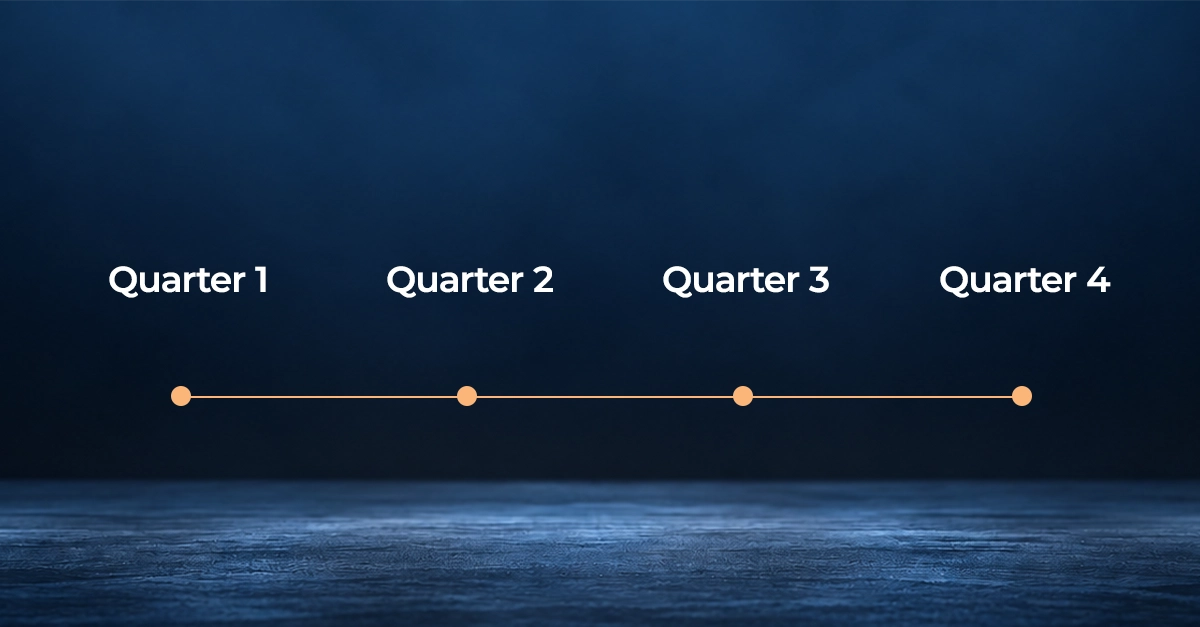
Inventory and tiering first, then ownership and policy, then a pilot on your top-tier vendors, then full coverage and board reporting. Four quarters, four milestones.
You've got to meet people where they're at, so here's a 12-month sequence, not a two-year roadmap. Australian Signals Directorate sets out a similar order in its official guidance, moving from identifying your vendors to setting expectations, auditing for compliance and monitoring.
What should I have in place by the end of each quarter?
A tiered inventory, a signed-off policy, assessed top-tier vendors and your first board report. Treat this as an illustrative sequence and set the pace against your vendor count.
Your first year of vendor risk management
Quarter one: Build your vendor inventory and tier it.
Quarter two: Sign off your policy, confirm the owner and set the decision rules for residual risk.
Quarter three: Pilot your assessments on top-tier vendors and follow up on each condition you set.
Quarter four: Extend coverage to the remaining tiers and deliver your first quarterly board report
Quarter three earns the programme its credibility. The questions your vendors can't answer with evidence become the findings your board needs to see. From there, the work moves into monitoring and offboarding, covered in vendor risk management across the full lifecycle.
What to do now
You were asked to build a vendor risk management programme, not run another round of checks. Start with the inventory on Monday. The rest follows in order.
Before you do, ask yourself two questions. Can you show your board the evidence behind your riskiest vendor's security claims? Do you know whether the last condition you set on a vendor was met?
If either answer gives you pause, it's worth a conversation. Start with Advanta's vendor risk assessment support.
More Articles



Stay up to date
Subscribe to our newsletter for IT news, case studies and promotions