

GRC Consulting Explained, for the Moment Someone Asks You to Prove It
QUICK SUMMARY
Core verdict: GRC consulting is worth it the moment a client, an insurer or a regulator asks you to prove your risk and compliance position, not just describe it.
Key insight: Governance, risk and compliance work as three separate layers, not one blended idea. It's common to have one or two of these layers built without realising the third is missing entirely. Actionable step: Ask yourself if your leadership team could explain your risk position on the spot today. If you're not sure, that's your answer.
Actionable step: Ask yourself if your leadership team could explain your risk position on the spot today. If you're not sure, that's your answer.
QUICK NAVIGATION
It's almost always the same trigger that brings someone here. A prospective client sent over a tender requirement, or an audit finding comes back with a line in it that says something about GRC. You don't know if it applies to you, and there's a deadline sitting above it.
That's not a reason to panic. It's a sign a client, an auditor or a vendor has finally asked you to prove your risk and compliance position, something you've probably been assuming was fine.
What does a GRC consultant do?
A GRC consultant reviews how your business handles governance, risk and compliance, then tells you where the gaps sit and what to do about them. It's different to what your accountant, lawyer or IT provider already covers, because none of them are checking all three areas together.
People usually think this overlaps with a service they are already paying for. It doesn't, not fully. Your IT provider keeps the systems running. Your accountant keeps the numbers straight. A GRC consultant looks at whether your decisions, your awareness of risk, and your paperwork would survive someone else checking them.
Governance, risk and compliance aren't three ways of saying the same thing. They're three separate layers, and like a good sandwich, missing one changes what you've actually got.

I've worked with plenty of businesses that had built one or two of these layers without meaning to. The third one's usually the one missing, and it's the one an owner or leadership team rarely notices until a client, auditor, or insurer asks for it.
For structured support across all three, Advanta's GRC consulting service is built around exactly this gap.
How do I know if my business needs GRC consulting?
You need it the moment a client, an insurer, a regulator or a tender panel asks you to prove your risk and compliance position rather than just describe it. Rapid growth, a recent incident, or a new industry requirement usually bring it forward too.
This isn't about company size. I've worked with small firms facing this exact pressure because one client contract demanded it, and larger firms that had never been asked until now. The real question isn't whether you're big enough. It's whether a client, an insurer or a regulator has started asking you to prove what you've been assuming.
Signs it's worth having the conversation:
- A client, tender or insurer has asked for evidence you don't have on hand
- You've grown fast, and your processes haven't caught up
- You've had an incident, a near miss, or a vendor issue that shook your confidence
- Your leadership team couldn't clearly explain your risk position if asked today
What does working with a GRC consultant look like?
It usually starts with a structured review of your current position, your vendors, your data handling and your documented controls, put into terms your leadership team can act on rather than a compliance report that sits in a drawer unread. From there, you get a clear view of where you stand and what's worth fixing first.
I've seen this play out with businesses that assumed their vendor relationships were fine because no breach, complaint or incident had surfaced yet. Once we looked properly, the picture was different.
From assuming to knowing, how PVW Partners closed the gap
PVW Partners relied on cloud platforms and specialist software, trusting vendor claims on reputation and sales assurances rather than evidence. We ran a structured vendor risk assessment across their key vendors and translated the findings into decisions their leadership team could actually act on.
"Engaging Advanta Advisory removed uncertainty from vendor decisions and helped us move from assumption based trust to evidence based decision making when it comes to vendor risk." — Fiona McGill, COO, PVW Partners
What to do now
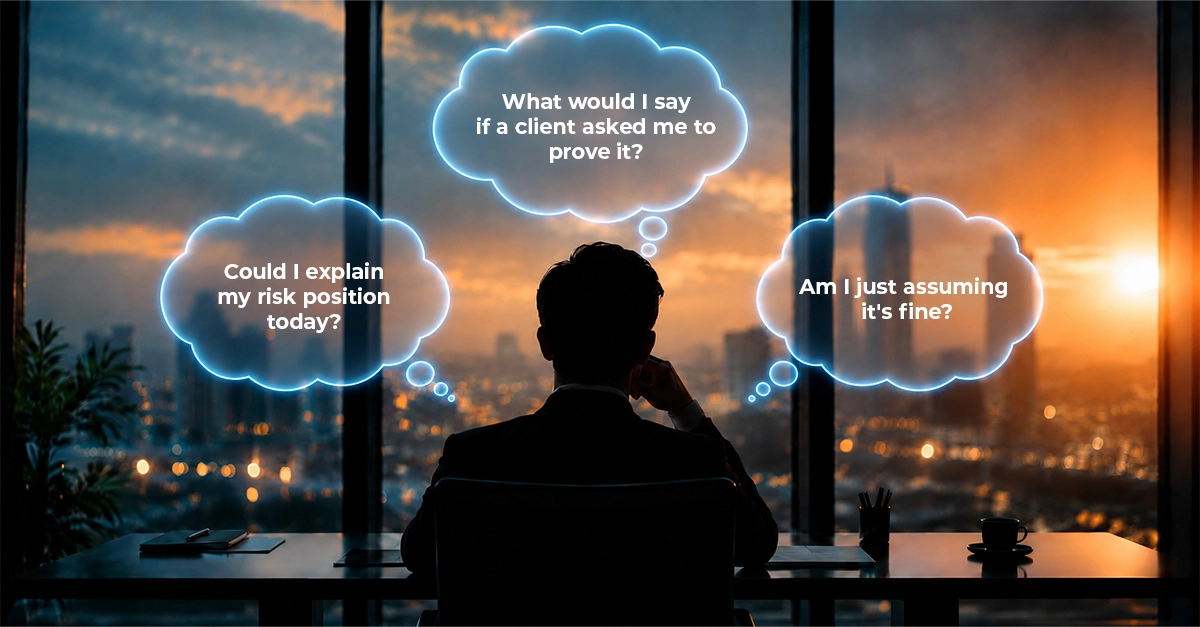
If you're not sure where your business stands, ask yourself three things. Could someone in your business explain your risk position today, on the spot? Do you know what you'd say if a client asked you to prove it? Has anyone actually checked, or have you just assumed it's fine?
If any of that leaves you uneasy, it's worth having the conversation.
More Articles



Stay up to date
Subscribe to our newsletter for IT news, case studies and promotions